
Synthetic Rug and Runner Deep Cleaning in Addison, IL: Heavy Soil, Traffic Lanes, and Oily Spot Removal
A returning FiberFolk customer recently brought us a synthetic area rug and a synthetic runner for professional deep cleaning at our rug cleaning facility in Addison, IL. This customer has cleaned rugs with us several times before, so they were already familiar with our in-plant rug washing process, pickup and delivery service, and the level of care we provide for area rugs and runners.
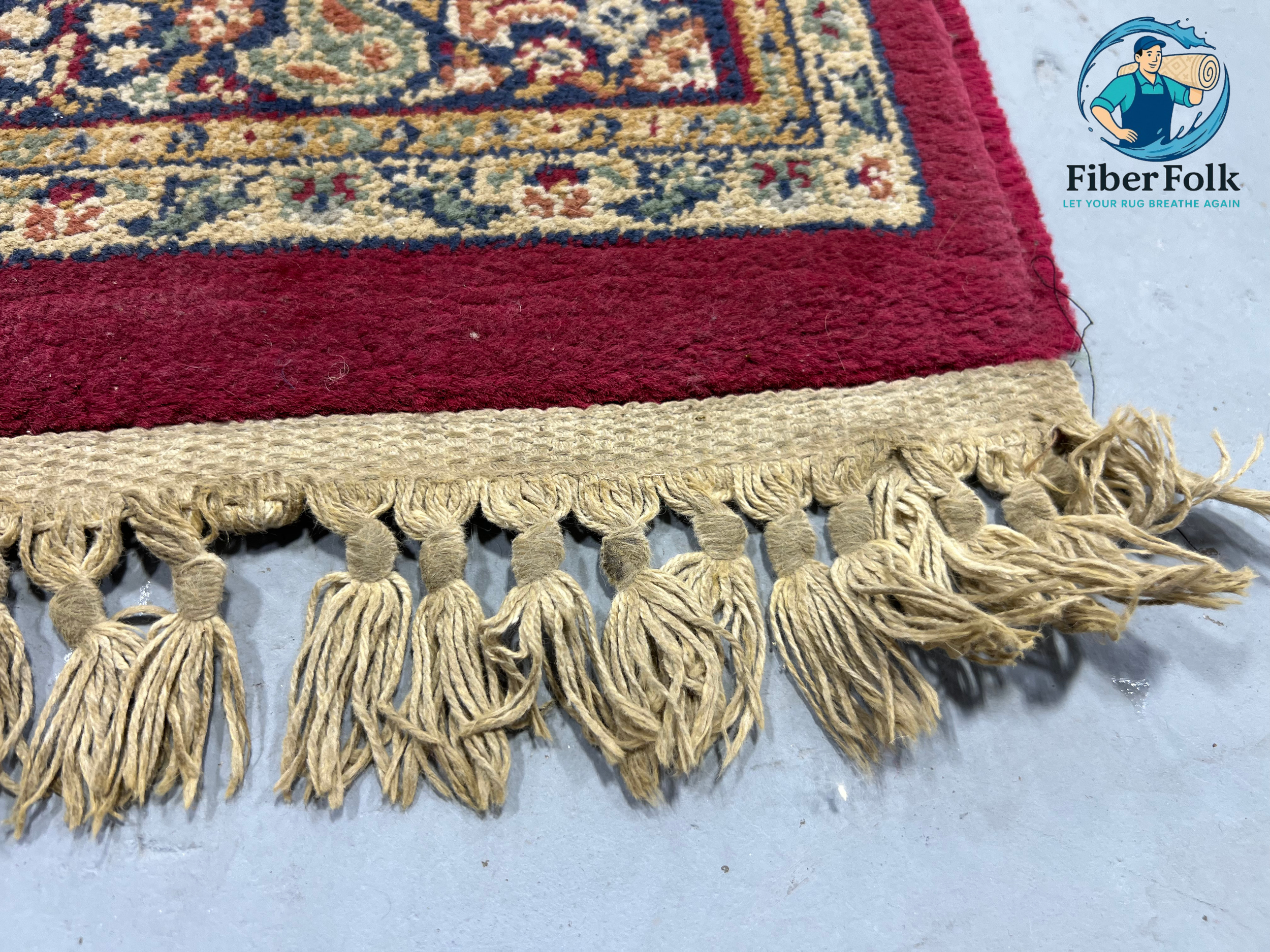
Both pieces had been used in high-traffic areas of the home and showed clear signs of accumulated soil, daily foot traffic, and general use. The runner had a very noticeable heavy-traffic lane through the center walking path, while the area rug also had oily spots that needed extra attention before washing.
This was not a case of one simple stain. The main problem was years of embedded dry soil, compacted dirt, oily residue, and traffic lane buildup inside the rug fibers. Over time, this type of soil can make a synthetic rug look darker, duller, and more worn than it really is.
“Before cleaning: synthetic rug and runner with heavy soil buildup and visible traffic lane wear.”
A Common Problem with Synthetic Rugs and Runner Rugs
Synthetic area rugs and runner rugs are very common in busy homes because they are practical, affordable, and often used in hallways, entryways, living rooms, kitchens, and other high-traffic spaces.
But even synthetic rugs need proper cleaning.
Regular vacuuming helps, but it cannot always remove fine dry soil that settles deep into the pile. As people continue walking over the rug, that soil becomes compacted into the fibers. This creates dark traffic lanes, dull colors, and a generally tired appearance.
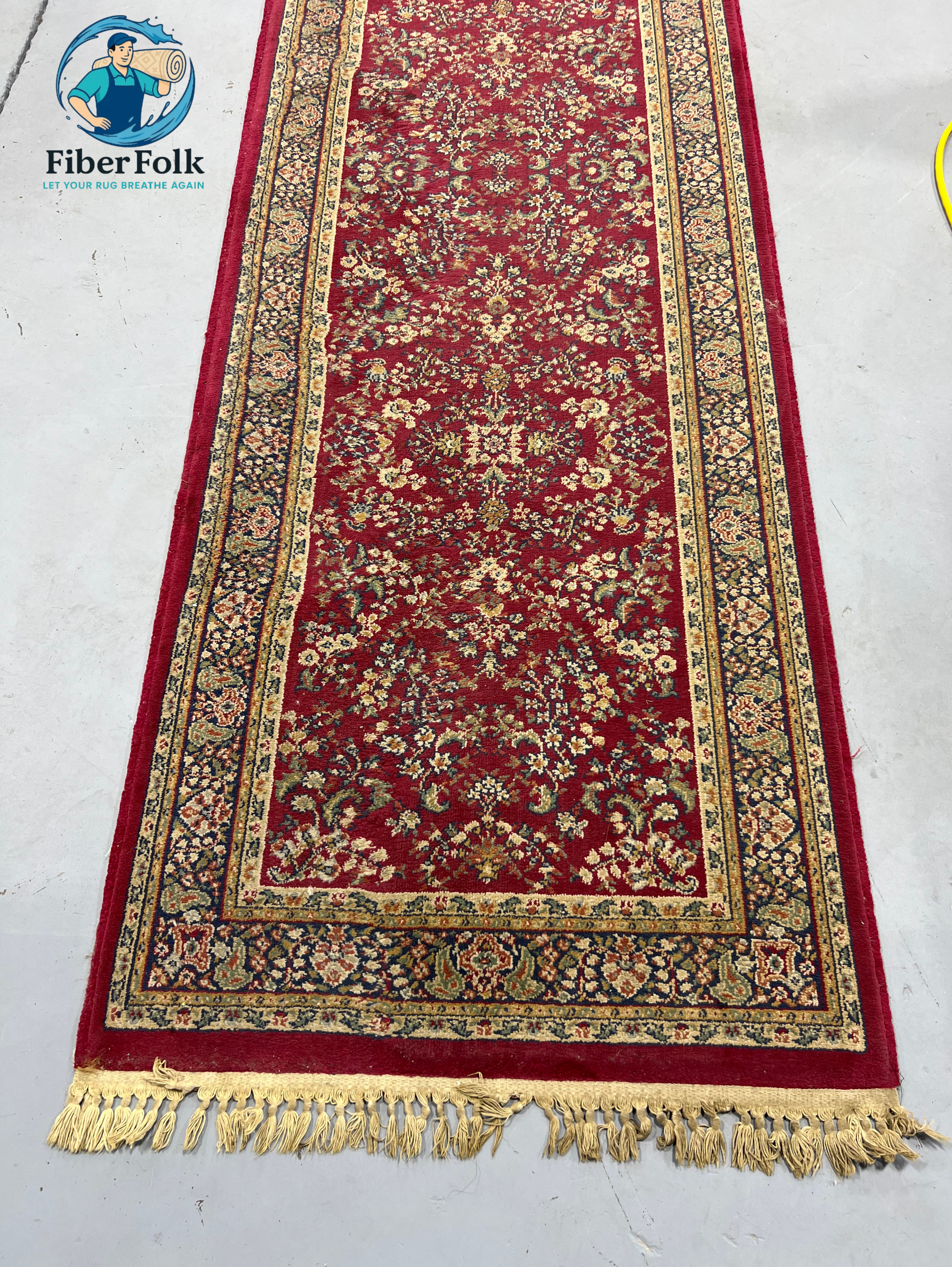
In this case, the runner was a perfect example. The center walking path was much darker than the surrounding areas because of heavy soil buildup. The rug had collected a significant amount of dry soil, and that soil was hiding the original brightness of the fibers.
The area rug also had oily spots. Oily spots can attract and hold onto more dirt, which makes certain areas look darker and more soiled than the rest of the rug.
Initial Rug Inspection Before Cleaning
Before starting the cleaning process, we inspected both rugs carefully. Every rug that comes into our facility is evaluated individually before washing because the safest cleaning method depends on the rug’s fiber, construction, condition, backing, dyes, stains, and overall wear.
During the inspection, we checked:
• Fiber type
• Rug construction
• Backing condition
• Heavy traffic areas
• Oily spots
• Embedded soil buildup
• Edge condition
• Overall wear
• Whether the rugs were suitable for a full in-plant deep wash
Both pieces were synthetic and structurally stable, which made them good candidates for professional deep rug washing.
Dry Soil Removal and Dusting Before Washing
One of the most important parts of professional rug cleaning happens before the rug is washed.
Both the synthetic area rug and the runner released a significant amount of dry soil during the dusting and pre-cleaning stage. This is something many customers do not realize. A rug can look only slightly dirty on the surface, but still hold a large amount of dry soil deep inside the fibers.
This dry soil can include dust, sand, grit, hair, outdoor dirt, food particles, and other debris tracked into the home over time. When this soil stays inside the rug, it can make the rug look darker and can also contribute to fiber wear.
For this runner, the dry soil was especially concentrated in the heavy traffic lane. That center walking path had absorbed years of foot traffic and compacted soil. Removing as much dry soil as possible before washing helped the deep cleaning process work much better.
This is one of the biggest differences between basic surface cleaning and professional in-plant rug washing. At FiberFolk, we focus not only on the surface appearance, but also on removing the soil hidden inside the rug.
“Dry soil removed before washing — an important step in professional rug cleaning.”
Treating Heavy Traffic Lanes and Oily Spots
After dry soil removal, we focused on the areas that needed extra attention.
The runner had a strong traffic lane through the center. Heavy traffic lanes are common on hallway runners, entry rugs, kitchen runners, and living room rugs because people walk over the same area again and again. Over time, soil becomes packed into the fibers, and the rug begins to look darker in the walking path.
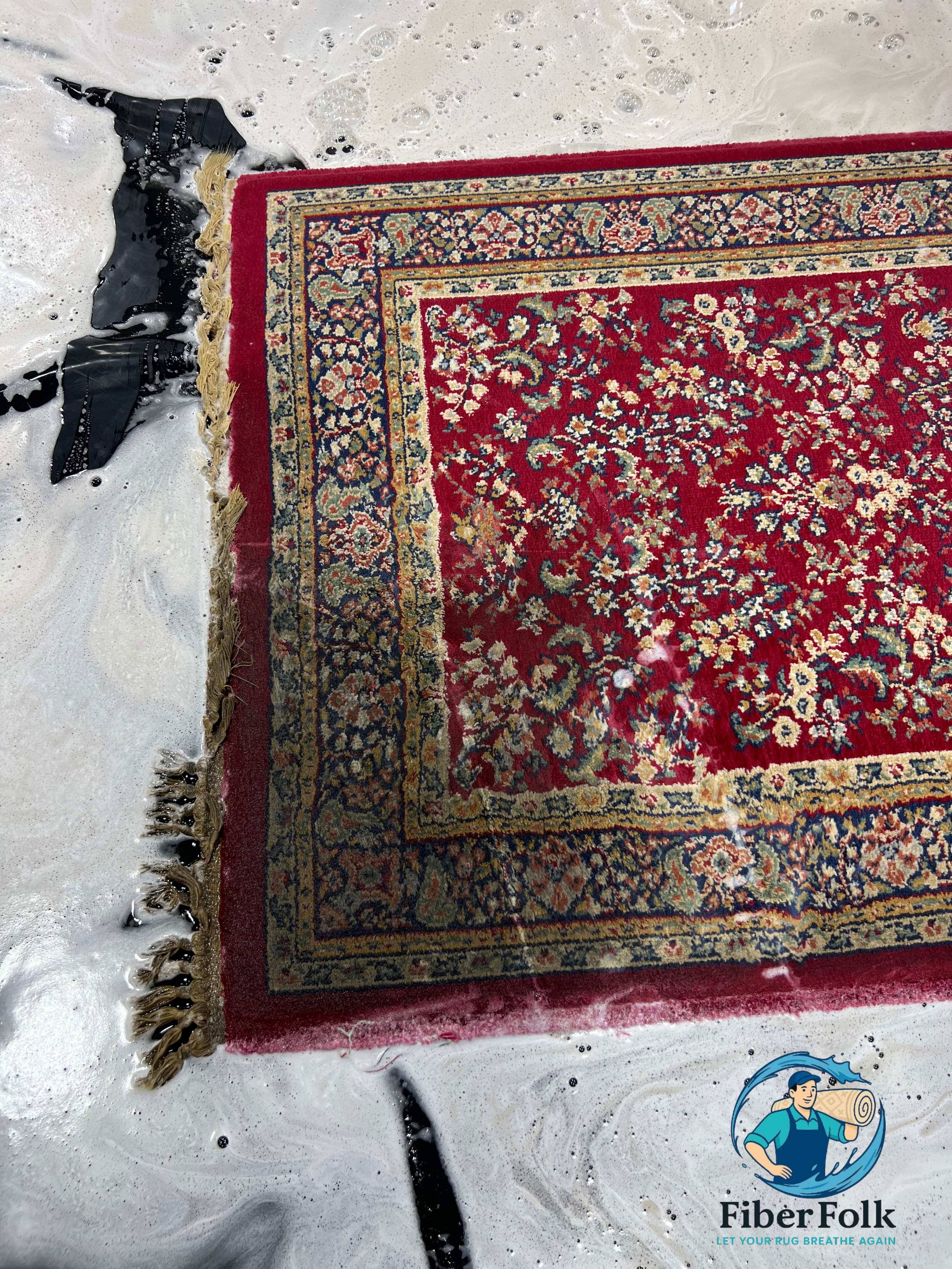
The area rug also had oily spots. Oily spots can be more difficult than normal soil because oil holds dirt and can make the rug look stained or shadowed. These areas were treated before washing so the cleaning process could break down the oily residue and release more soil from the fibers.
With traffic lanes, it is important to be honest. Some dark areas are caused by removable soil, while other areas may be caused by fiber wear, abrasion, color loss, or permanent discoloration. Professional cleaning can often make a major improvement, but not every traffic lane can disappear completely.
In this case, the rugs responded very well. The heavy traffic lane improved significantly, the oily spots improved, and the overall appearance became much cleaner and brighter.
“Heavy traffic lanes and oily spots were treated before the full deep wash.”
The Deep Rug Washing Process
Once the preparation was complete, both rugs went through our full in-plant deep washing process at FiberFolk.
Because the main problem was heavy embedded soil, the goal was to flush and clean the fibers thoroughly. Synthetic rugs can hold a surprising amount of soil, especially when they are used in busy areas of the home. A proper deep wash helps remove the contaminants that make the rug look dull, dark, and worn.
As the washing process continued, the improvement became clearly visible. The runner’s traffic lane began to lighten, and the colors looked fresher. The rug no longer had the same dull, tired appearance that it had when it arrived.
“In-plant deep washing helps remove soil from deeper inside the rug fibers.”
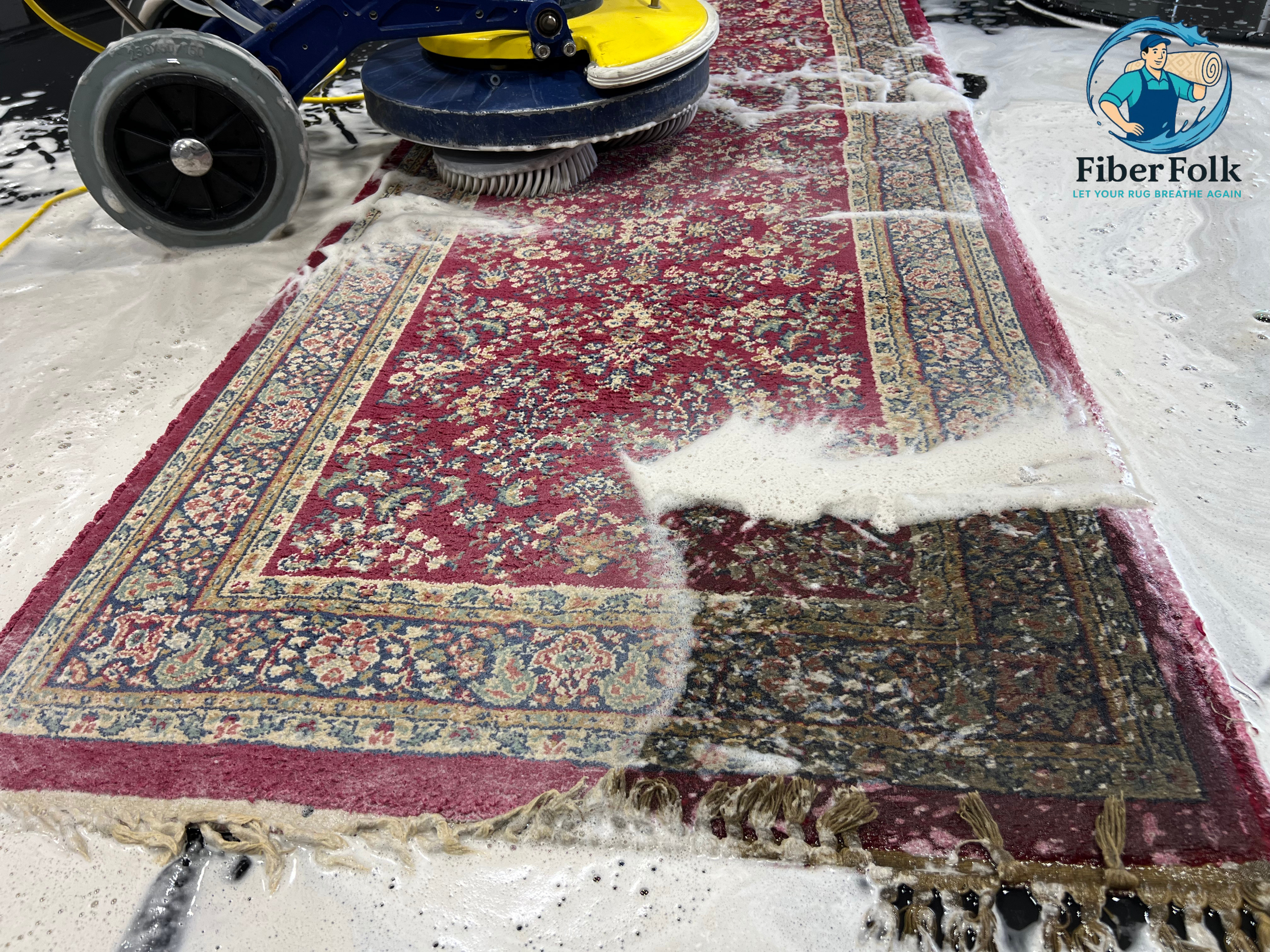
The oily areas on the area rug also improved after treatment and washing. Once the oily residue and attached soil were released, the rug looked cleaner and more even overall.
Why In-Plant Rug Washing Makes a Difference
Many people search for “rug cleaning near me,” “area rug cleaning,” “runner rug cleaning,” “synthetic rug cleaning,” or “deep rug washing” because their rug looks dirty, dark, or worn.
The truth is that many rugs do not need replacement. They need proper dry soil removal, spot treatment, and deep cleaning.
In-plant rug washing allows us to clean rugs more thoroughly than a quick surface cleaning inside the home. At our rug cleaning facility, we can inspect the rug, remove dry soil, treat problem areas, wash the rug properly, rinse it, dry it under controlled conditions, and inspect it again before delivery.
This process is especially helpful for:
• Synthetic area rugs
• Hallway runners
• Entry rugs
• Kitchen runners
• High-traffic rugs
• Rugs with dark traffic lanes
• Rugs with oily spots
• Rugs with heavy embedded soil
• Rugs that look dull, gray, or tired
Every rug is different, so the cleaning process is adjusted based on the condition and construction of the rug.
Drying and Final Inspection
After washing, both rugs were dried carefully and inspected again before being prepared for delivery.
The final improvement was strong. The runner looked much brighter, the heavy traffic lane was greatly improved, and both pieces had a cleaner, fresher appearance overall.
The synthetic fibers looked cleaner and more vibrant, and the area rug looked more even after the oily spots were treated and washed.
Most importantly, both rugs maintained their structure throughout the cleaning process and were ready to go back to the customer clean, dry, and ready for use.
“After deep cleaning: cleaner, brighter synthetic fibers and improved traffic lane appearance.”
Final Results
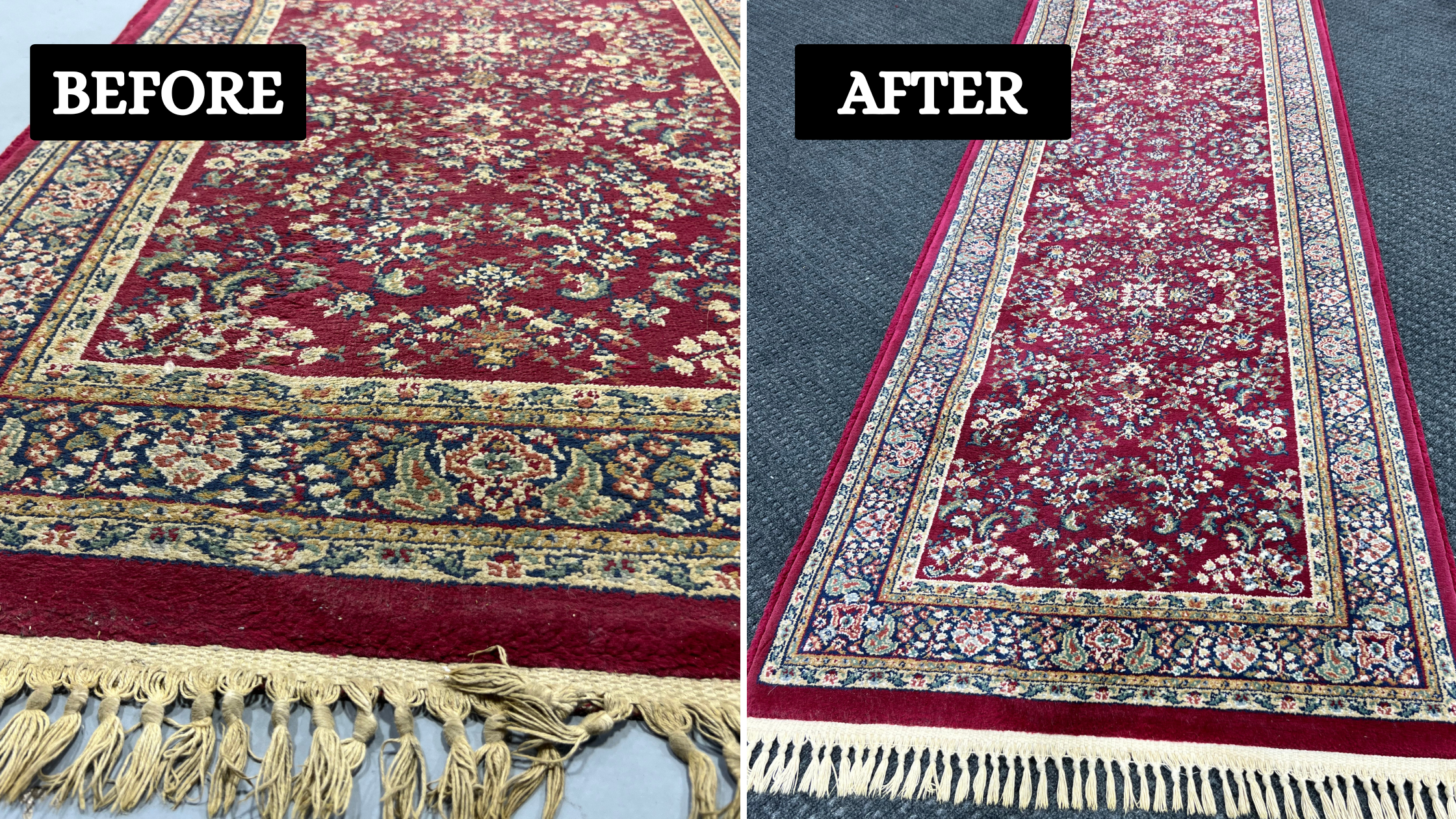
The final results included:
• Removal of a large amount of dry embedded soil
• Significant improvement in the runner’s heavy traffic lane
• Improvement of oily spots on the synthetic area rug
• Cleaner and brighter synthetic fibers
• Fresher overall appearance
• Better color visibility
• Safe full deep wash without damage to the rugs
This project is a good example of why professional rug cleaning can make such a big difference, especially for synthetic rugs and runners used in busy homes.
What arrived looking dark, dull, and heavily soiled left our facility looking cleaner, brighter, and refreshed.
Professional Area Rug Cleaning in Addison, IL and Nearby Suburbs
At FiberFolk, we specialize in professional area rug cleaning, synthetic rug cleaning, wool rug cleaning, oriental rug cleaning, runner rug cleaning, pet odor treatment, stain treatment, and in-plant deep rug washing.
Our rug cleaning facility is located in Addison, IL, and we provide pickup and delivery service for customers in Addison, Schaumburg, Elk Grove Village, Roselle, Lombard, Elmhurst, Oak Brook, Glen Ellyn, Arlington Heights, Mount Prospect, Rolling Meadows, Palatine, Hoffman Estates, Barrington, and nearby Chicago suburbs.
Every rug is inspected individually before cleaning. We look at the fiber type, construction, backing, dyes, soil level, stains, traffic lanes, odor concerns, and overall condition before choosing the safest cleaning method.
For this returning customer, the solution was clear: remove the heavy dry soil, treat the oily spots, deep wash the synthetic rug and runner, and bring back a cleaner, fresher appearance.
If your rug has dark traffic lanes, heavy soil, oily spots, pet odor, stains, or a dull appearance, FiberFolk can inspect it and recommend the best cleaning approach based on the rug’s material and condition.
